Dog Car Travel Gear Checklist: Safe Restraints and Trip Essentials
Affiliate disclosure: This article contains affiliate links. If you buy through them, we may earn a small commission at no extra cost to you. As an Amazon Associate I earn from qualifying purchases. Links go to Amazon search results for the product types we mention, not to specific products we have tested.
Not veterinary advice. This article shares general information about dog gear only. It is not a substitute for advice from your veterinarian. Check fit and supervise your dog with new gear, toys and chews, and ask your vet about health, diet, injuries or behaviour concerns.
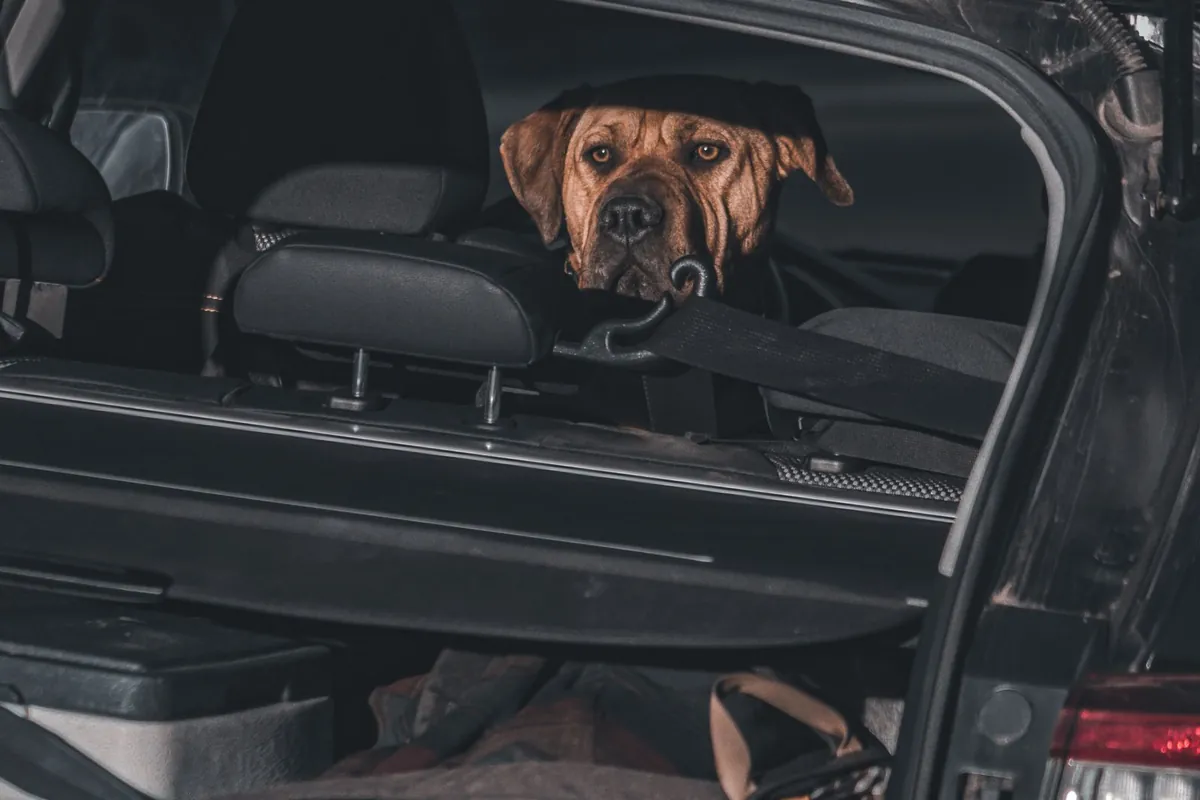
Taking your dog in the car is part of life, whether it's a drive to the park, the vet or across the country. A loose dog in a car can distract the driver and be thrown forward in a sudden stop. Some places also have rules about restraining pets in vehicles.
Here's how to choose safety gear and what to pack for longer trips.
Restraint options
Car safety harness
A car harness attaches to the seat belt or a seat anchor with a short tether. Look for one sold specifically for car use, ideally with independent crash testing. Many walking harnesses aren't designed to take crash forces.
- Keep the tether short, so your dog can sit and lie down but not reach the front seats or fall into the footwell.
- Never attach a car tether to a collar. In a sudden stop, that puts all the force on the neck.
Travel crate
A sturdy crate secured in the cargo area or back seat keeps your dog contained. Plastic and heavy-duty crates are common choices. Strap the crate down so it can't slide, and don't put a crate in a spot where it could hit passengers in a crash. Our crate size guide explains measuring.
Booster seat for small dogs
Small dogs may like a raised seat so they can see out. It should attach securely to the car seat, and the dog should be clipped to a harness, not a collar.
Cargo barrier
A barrier between the cargo area and the cabin keeps a dog out of the passenger area. It doesn't hold the dog in place, so it's often used with a crate or tether.
Front seats and airbags
Keep dogs out of the front passenger seat. Airbags deploy with great force. The back seat or cargo area (with a crate) is safer.
If you're comparing options, a crash tested dog car harness search shows what's available. Check what testing the seller describes and confirm sizing.
Comfort and clean-up gear
- Seat cover or hammock: protects seats from hair, mud and claws. Hammock styles also stop dogs sliding into the footwell. Search waterproof dog car seat cover to compare.
- Ramp or steps: helpful for older, small or heavy dogs getting into high vehicles.
- Towel: for wet or muddy dogs.
- Window shade: reduces sun on hot days.
- Non-slip mat in the cargo area.
Road trip packing list
- Food for the trip plus a spare day or two
- Water and a collapsible bowl
- Leash, harness and spare collar with ID tags
- Poop bags
- Any medications, with instructions
- Vaccination records and vet details, especially if crossing borders or staying in kennels
- Familiar bedding or a blanket
- A favorite toy or chew
- Towels and wipes
- A basic pet first aid kit
- A recent photo of your dog in case it gets lost
- Tracker, if you use one. See our GPS tracker guide.
On the road
Plan regular breaks
Stop every couple of hours for a short walk, toilet break and water. Always leash your dog before opening the door, as busy rest stops are risky places for an escape.
Never leave a dog in a parked car
Cars heat up very quickly, even on mild days with windows cracked. In winter, cars can also get dangerously cold. Plan stops where your dog can come with you, or someone stays with it.
Feed lightly before travel
Many dogs travel better on a light meal a few hours before the drive. Ask your vet for advice on timing, especially for dogs prone to car sickness.
Getting a nervous dog into the car
Some dogs hesitate at the car door. Build confidence in short steps:
- Open the door and reward your dog for approaching the car.
- Toss a treat onto the seat or into the crate and let your dog climb in and out.
- Sit in the car together with the engine off for a minute.
- Start the engine, reward, then stop.
- Take a short drive to somewhere fun, like a park.
Car sickness and anxious travelers
Signs include drooling, yawning, whining, restlessness or vomiting. Some ideas that can help:
- Short, positive practice trips that end somewhere fun
- Facing forward, with a view out of the window for some dogs or a covered crate for others
- Fresh air and a cool car
- Avoiding big meals before driving
Puppies often grow out of car sickness. If your dog is regularly sick or very anxious, talk to your vet. There are treatments and training plans that can help.
Winter driving with dogs
- Keep a blanket and a coat in the car (see our winter dog coat guide).
- Pack extra water in case of delays.
- Wipe paws after walks on salted roads.
- Don't leave your dog in a cold car.
Frequently asked questions
What's the safest way for a dog to travel in a car?
A properly secured crate or a crash-tested car harness on a short tether in the back seat are common safe options.
Can I use a normal walking harness in the car?
A walking harness may not be designed for crash forces. Look for one sold for car use.
Can my dog sit in the front seat?
It's safer not to. Airbags can seriously injure dogs, and a dog in front can distract the driver.
How often should I stop on a road trip with my dog?
Every couple of hours is a common guide for toilet breaks, water and stretching.
How do I stop my dog getting car sick?
Short practice trips, a light meal beforehand, fresh air and a forward view can help. Ask your vet if it continues.
Read next: Dog Grooming Tools for Home: Brushes by Coat Type, Nail Tools and More →