Dog Grooming Tools for Home: Brushes by Coat Type, Nail Tools and More
Affiliate disclosure: This article contains affiliate links. If you buy through them, we may earn a small commission at no extra cost to you. As an Amazon Associate I earn from qualifying purchases. Links go to Amazon search results for the product types we mention, not to specific products we have tested.
Not veterinary advice. This article shares general information about dog gear only. It is not a substitute for advice from your veterinarian. Check fit and supervise your dog with new gear, toys and chews, and ask your vet about health, diet, injuries or behaviour concerns.
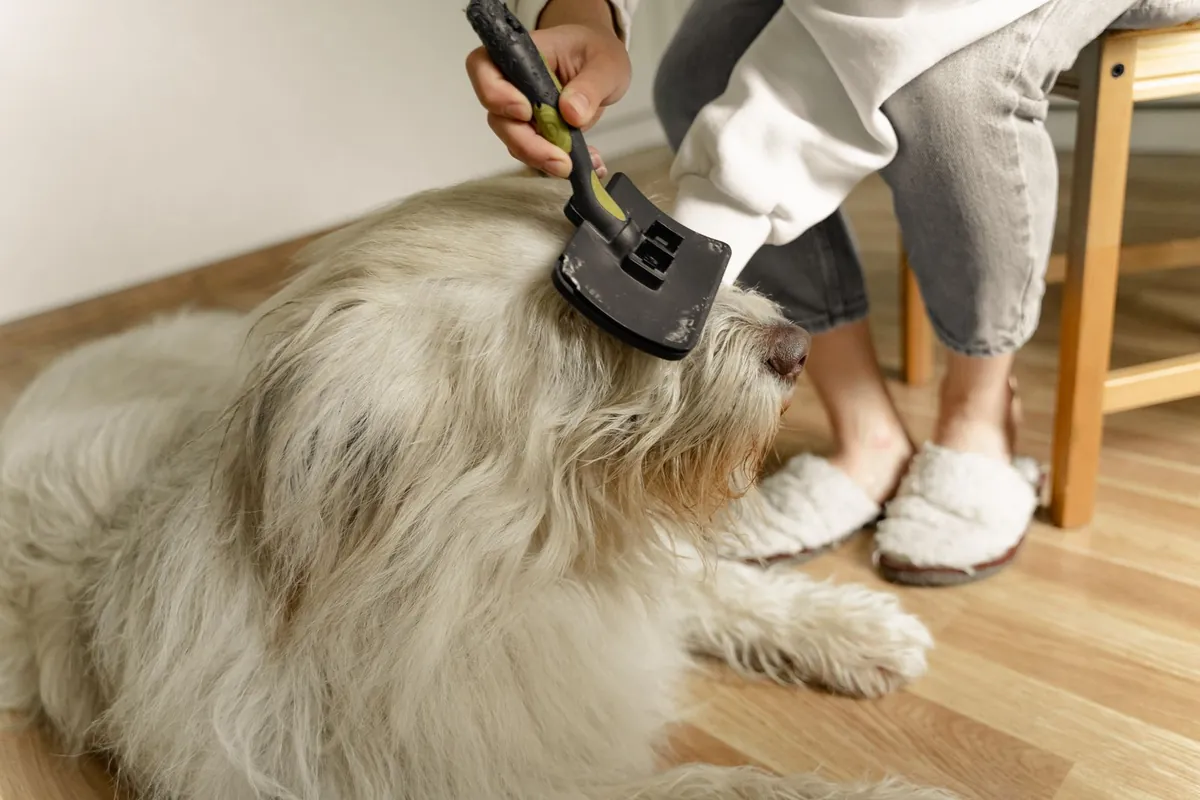
Regular grooming at home keeps your dog's coat healthier, cuts down on shedding around the house and gives you a chance to spot lumps, ticks, sore spots or skin problems early.
You don't need a big kit. A couple of brushes matched to your dog's coat, a nail tool and a few basics will cover most dogs between professional grooms.
Start with your dog's coat type
Short, smooth coats
Examples include many hound, boxer and pointer types.
- Rubber curry brush or grooming mitt: lifts loose hair and dirt, and most dogs enjoy the massage.
- Bristle brush: smooths the coat and spreads natural oils.
Double coats
A soft, dense undercoat under longer guard hairs, as in many shepherd, retriever, husky and spitz types. These shed heavily, especially seasonally.
- Undercoat rake: reaches through the topcoat to remove loose undercoat.
- Slicker brush: fine wire pins for the outer coat and feathering.
- Wide-toothed comb: checks for tangles.
Double coats usually should not be shaved unless your vet recommends it, as the undercoat helps with temperature regulation.
Long, silky coats
Examples include many spaniels and setters, and longer-haired toy breeds.
- Pin brush: gentle on long hair.
- Slicker brush: for tangles and feathering.
- Metal comb: for checking down to the skin, especially behind ears and under legs where mats form.
Curly or wavy coats
Poodles, doodle crosses and similar coats.
- Slicker brush used gently, in sections, right down to the skin ("line brushing").
- Metal comb to check for hidden mats.
- These coats usually need regular professional trims as well.
Wiry coats
Many terriers have a harsh, wiry coat.
- Slicker brush and comb for weekly care.
- Professional hand-stripping or trimming every few months, depending on the coat and your preference.
For heavy shedders, a dog undercoat rake and a self cleaning slicker brush are a common pairing.
Nail care: clippers or grinder?
Long nails can change how a dog walks and can split or catch. Many dogs need a trim every few weeks, depending on how much they walk on hard ground.
Clippers
- Scissor-style clippers suit most dogs and give a clean cut.
- Guillotine clippers work for small to medium dogs.
- Quick and quiet, but you need to avoid cutting the quick, the blood vessel inside the nail.
Grinders
- A rotary tool that files the nail gradually.
- Less risk of cutting the quick, and leaves a smooth edge.
- Noisier, and some dogs need time to get used to the sound and vibration.
Whatever you use, take off small amounts at a time. In dark nails, the quick is hard to see. Keep styptic powder nearby in case of bleeding. If your dog is very anxious about nail care, ask your vet or a groomer to show you, or have them do it. A dog nail grinder is worth considering if clippers make you nervous.
Bath time basics
- Dog shampoo: use one made for dogs. Human shampoo isn't formulated for dog skin. If your dog has skin problems, ask your vet about a suitable shampoo.
- How often: many dogs only need a bath every few weeks or when dirty. Too much bathing can dry the skin.
- Rinse thoroughly, as leftover shampoo can irritate.
- Dry well, especially thick coats, to avoid damp skin underneath.
- A lick mat stuck to the bath wall can keep your dog calm.
Ears, eyes and teeth
- Ears: check weekly for redness, smell or discharge. Wipe the outer ear with a vet-recommended cleaner if needed. Never push anything deep into the ear canal.
- Eyes: wipe away crust with a damp, soft cloth.
- Teeth: brushing with a dog toothbrush and dog toothpaste (never human toothpaste, which may contain xylitol) helps keep teeth cleaner. Your vet can advise on dental care.
Any redness, swelling, bad smell, lumps or pain are worth showing to your vet.
A simple weekly routine
- Brush using the right tools for the coat, 5 to 15 minutes depending on length.
- Check skin, paws, ears and teeth, and look for ticks or fleas.
- Wipe paws and eyes.
- Trim nails every few weeks.
- Bathe only when needed.
- Wash bedding. See how to wash a dog bed.
Making grooming positive
Keep sessions short and pair them with treats. Groom when your dog is tired after a walk, and stop before it gets fed up. Handle paws, ears and mouth gently during calm moments, so grooming feels normal. Winter can also mean trimming fur between paw pads; see our dog boots and paw care guide.
Frequently asked questions
What brush should I use on my dog?
It depends on the coat. Rubber brushes suit short coats, undercoat rakes and slickers suit double coats, and pin brushes and combs suit long coats.
How often should I brush my dog?
Short coats every week or so, and long, curly or double coats several times a week or more during shedding seasons.
Are nail grinders better than clippers?
Neither is better for every dog. Grinders reduce the risk of cutting the quick, while clippers are quicker and quieter.
Can I use human shampoo on my dog?
It's best not to. Use a shampoo made for dogs, and ask your vet if your dog has skin issues.
Should I shave my double-coated dog in summer?
Usually not, unless your vet recommends it. The undercoat plays a role in keeping dogs comfortable.
Read next: How to Choose a Dog Harness: Fit, Styles and Sizing Explained →