Dog Paw Balm for Hyperkeratosis: What to Know First
Affiliate disclosure: This article contains affiliate links. If you buy through them, we may earn a small commission at no extra cost to you. As an Amazon Associate I earn from qualifying purchases. Links go to Amazon search results for the product types we mention, not to specific products we have tested.
Not veterinary advice. This article shares general information about dog gear only. It is not a substitute for advice from your veterinarian. Check fit and supervise your dog with new gear, toys and chews, and ask your vet about health, diet, injuries or behaviour concerns.
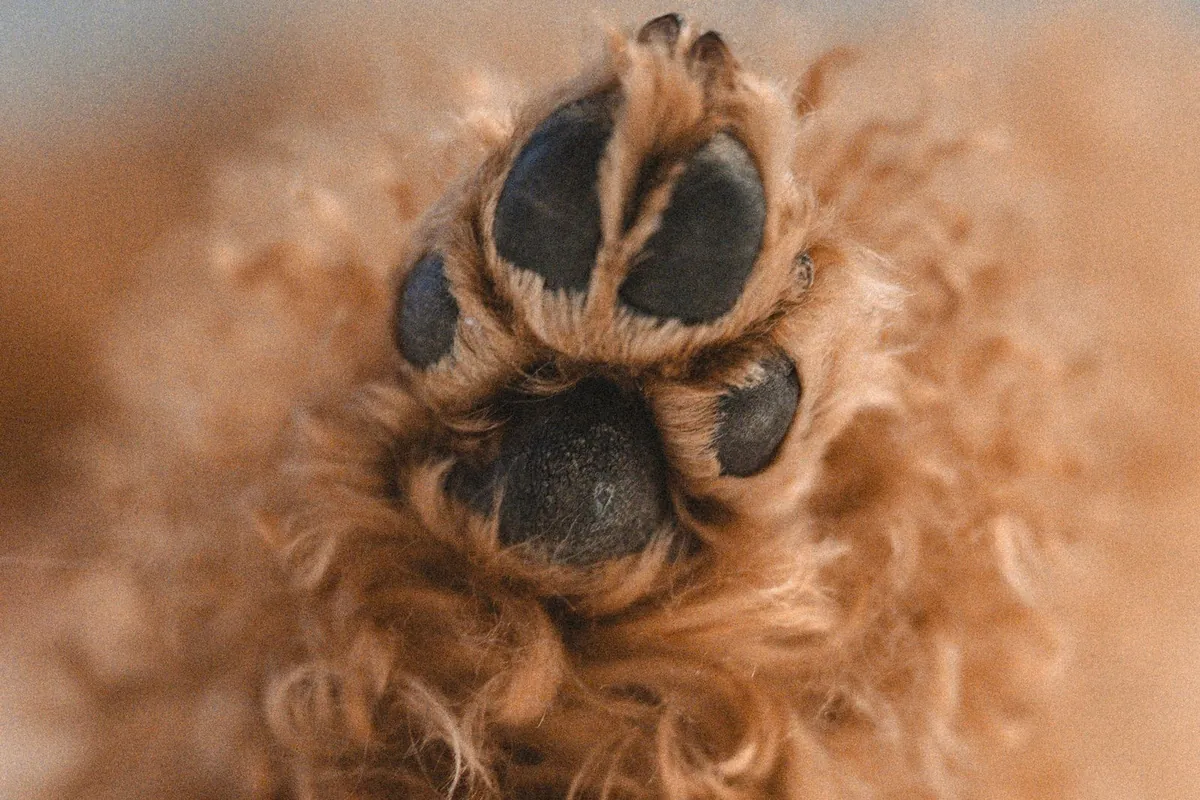
If your dog's paw pads look thick, rough, crusty or even "hairy," with little hard spikes of skin around the edges, you may be looking at paw pad hyperkeratosis. It's especially common in older dogs, and it often gets worse in winter when cold air, salt and indoor heating dry out the pads.
Paw balms are a common part of looking after dry, rough pads, and they may help moisturize and protect the skin. This guide explains in general terms what hyperkeratosis is, when to see your vet, what to look for in a dog paw balm for hyperkeratosis and how balms are usually applied, based on veterinary sources including the American Kennel Club (AKC) and the University of Minnesota's veterinary dermatology handbook.
Ask your vet first. Thick or crusty pads can have several causes, and only a vet can tell which one applies to your dog. Have your vet examine your dog before you start using any product, and follow their advice on what to use and how often. This article is general information, not a diagnosis or a treatment plan.
What is paw pad hyperkeratosis?
Hyperkeratosis means the skin is producing too much keratin, the tough protein that makes up skin, hair and nails. On the paws, the extra keratin builds up on the pads as a thick, hard layer. As the AKC explains, it can look rough, crusty or scaly, or form small "hairy" projections of hardened skin. It often appears on the nose as well.
The University of Minnesota veterinary dermatology handbook describes the common age-related form (idiopathic nasal and digital hyperkeratosis) as typically seen in older dogs, probably as an age-related change, and notes that any breed can be affected. Over time, the thickened skin can become very dry and develop cracks and fissures, and severe cases can cause pain and lameness.
What causes it?
Hyperkeratosis is a description of what the skin looks like, not a diagnosis of why. Veterinary sources list several possible causes:
- Age. Mild thickening in senior dogs is common and often more cosmetic than serious.
- Breed tendency. Some breeds are listed as predisposed, including cocker spaniels and English springer spaniels in the UMN handbook. The AKC also mentions breeds such as Labrador and golden retrievers, Dogues de Bordeaux and boxers.
- Hereditary forms that start young in certain breeds.
- Pressure and friction. Calluses from rough surfaces are similar but not the same as true hyperkeratosis. Dogs with arthritis may develop thickening at pad edges because they bear weight unevenly.
- Underlying disease. Conditions such as zinc-responsive dermatosis, autoimmune skin disease (pemphigus foliaceus), canine distemper and some metabolic diseases can cause similar changes.
That last point is why a vet check matters. If thickening appears suddenly, starts in a young dog, or comes with other symptoms like lethargy, weight loss, nasal or eye discharge, or skin problems elsewhere, your vet will want to investigate the cause.
When to see a vet
Book a vet visit if:
- This is the first time you've noticed thick or crusty pads.
- Your dog is young, or the change happened quickly.
- Your dog is limping, licking its paws a lot, or reluctant to walk.
- The pads have deep cracks, bleeding, swelling, discharge or a smell.
- The nose is also affected, or your dog seems unwell.
For mild, age-related thickening that your vet has already looked at, home care with a balm is often all that's needed.
Where paw balm fits in
According to the UMN handbook, the common age-related form is a long-term condition that is managed rather than cured, and mild cases that cause no discomfort may not need anything at all. Your vet decides what, if anything, your dog needs, and that can include steps that only a vet should carry out, such as trimming thickened tissue.
A paw balm is an everyday moisturizer. It may help keep pads supple, may help reduce dryness and cracking, and adds a protective layer before winter walks. It is not a treatment for the condition itself and works alongside your vet's advice, not instead of it.
The AKC quotes veterinarian Dr. Jo Myers advising owners not to aggressively peel or cut thickened tissue at home, because over-trimming can cause pain, bleeding and infection.
What to look for in a paw balm
Moisturizing and protective ingredients
Common ingredients in dog paw balms include:
- Waxes such as beeswax or candelilla wax, which form a protective layer.
- Plant butters such as shea butter or cocoa butter (cocoa butter is different from chocolate and is a common balm ingredient, but if in doubt ask your vet).
- Plant oils such as coconut, olive, sunflower or jojoba oil.
- Vitamin E, often used as an antioxidant in the formula.
Lick-safe formulas
Dogs lick their paws. Look for products made specifically for dogs and labeled as safe if licked. Avoid human foot creams, which can contain ingredients that aren't suitable for pets.
Ingredients to be careful with
- Essential oils. Some products contain them, and certain oils (for example, tea tree oil) can be harmful to dogs in concentrated form, according to the ASPCA. Use essential-oil products only if they're made for dogs, and ask your vet.
- Zinc oxide, found in some human creams and diaper ointments, can be harmful if licked in quantity. Don't use human zinc creams on paws.
- Fragrances can irritate sensitive skin.
- Human exfoliating foot products, such as callus removers. Don't use them on dogs; ask your vet if the pads need more than a moisturizer.
Texture and format
- Stick or tube balms are easy to apply without getting it all over your hands.
- Tins or jars are often better value and easier for working into thick, rough pads.
- Fast-absorbing formulas leave less residue on floors.
How to apply paw balm for hyperkeratosis
- Clean and dry the paws after walks, especially if they've been on salted or treated surfaces.
- Pat dry, leaving the pads just slightly damp.
- Massage a thin layer of balm into the pads, focusing on rough edges and cracks (unless they're open or bleeding, in which case see your vet).
- Distract your dog for a few minutes with a chew, a lick mat or a short cuddle so the balm can absorb.
- Use cotton socks at bedtime if your dog tries to lick it off. Some owners apply balm right before sleep for this reason.
- Repeat only as often as your vet suggests.
If the pads look worse, crack, bleed or your dog starts limping or licking a lot, stop and see your vet.
Winter care for dogs with hyperkeratosis
Cold, dry weather can make rough pads crack more easily.
- Rinse and dry paws after walks to remove salt and de-icers.
- Use a protective balm before walks on icy, salted streets, or consider dog boots.
- Trim the fur between the pads so snow doesn't ball up and pull at the skin.
- Keep indoor surfaces comfortable. Soft bedding helps older dogs who spend a lot of time lying down, since pressure points can develop calluses.
- Watch the nose too. Many dogs with paw hyperkeratosis also have a dry, crusty nose. Ask your vet whether the same balm is suitable there.
What to look for when shopping
- Lick-safe dog paw balm in a stick or tin: lick safe dog paw balm
- Paw balm for dry, cracked pads: dog paw balm dry cracked pads
- Dog socks for overnight application: dog socks non slip
- Pet grooming trimmer for fur between pads: dog paw hair trimmer
If balm doesn't seem to be enough, talk to your vet rather than trying stronger products at home.
Sources
- American Kennel Club, Everything You Need to Know About Hyperkeratosis in Dogs.
- University of Minnesota, *Small and Large Animal Dermatology Handbook, Vol. 2*, 3.11 Nasal and Digital Hyperkeratosis.
- ASPCA Animal Poison Control, people foods and household products to keep away from pets.
Frequently asked questions
Does paw balm get rid of hyperkeratosis?
No. Veterinary sources describe the common age-related form as a long-term condition that is managed rather than cured. A balm may help moisturize the pads; your vet will advise on anything more.
How often should I apply paw balm?
Ask your vet. How often depends on your dog's pads and your vet's advice, so follow the plan they give you.
Can I use coconut oil or petroleum jelly on my dog's paws?
Ask your vet before using any household product on your dog's paws. Coconut oil is a common ingredient in dog balms, but dogs lick their paws, so use products made for dogs and follow your vet's advice.
Should I trim the hard bits off my dog's pads?
Don't cut or peel thickened pads at home. Over-trimming can cause pain, bleeding and infection. If trimming is needed, your vet can do it safely.
Is hyperkeratosis painful for dogs?
Veterinary sources note that severe thickening with cracks can be painful and cause limping, so see your vet if your dog seems sore or the pads change.
Which dogs get paw hyperkeratosis?
It's most common in older dogs, and some breeds such as cocker spaniels and springer spaniels are listed as predisposed. Any breed can be affected, and some cases are linked to other health conditions.
Read next: Dog Toys for Strong Chewers: Durable and Safe Choices →